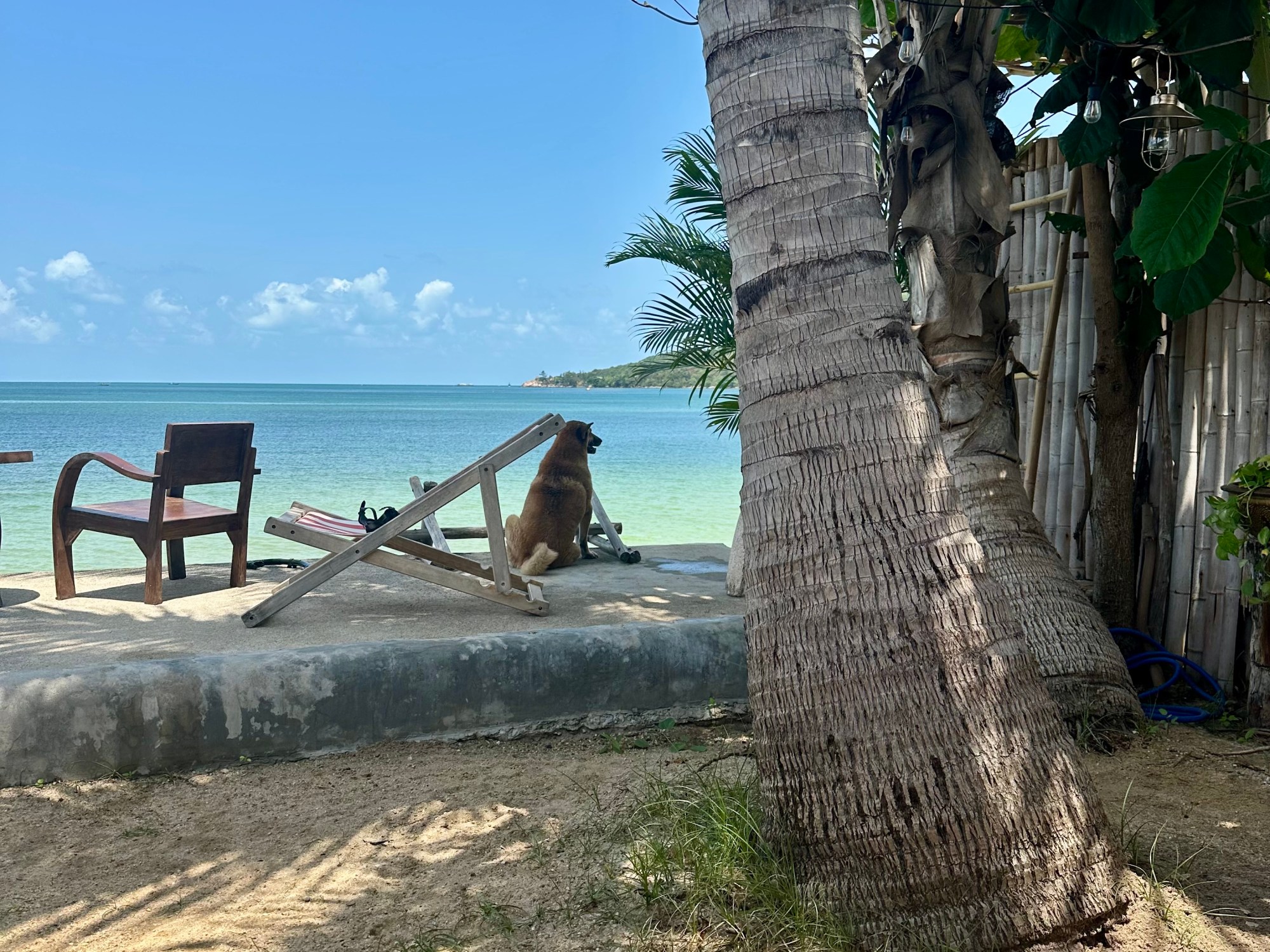
As some of you may have noticed — on Instagram, and perhaps even more so in my Medium articles — I have been thinking a great deal about home recently. Perhaps because I no longer know entirely what that word means to me anymore. Or perhaps because I am beginning to understand that home, at least for me, has never really been a fixed place at all, but rather a certain feeling of aliveness; a feeling that tends to emerge most strongly when life is still unfolding and not yet fully decided.
I apologise in advance for the slightly personal, sobby post… but this is honestly what occupies my mind lately.
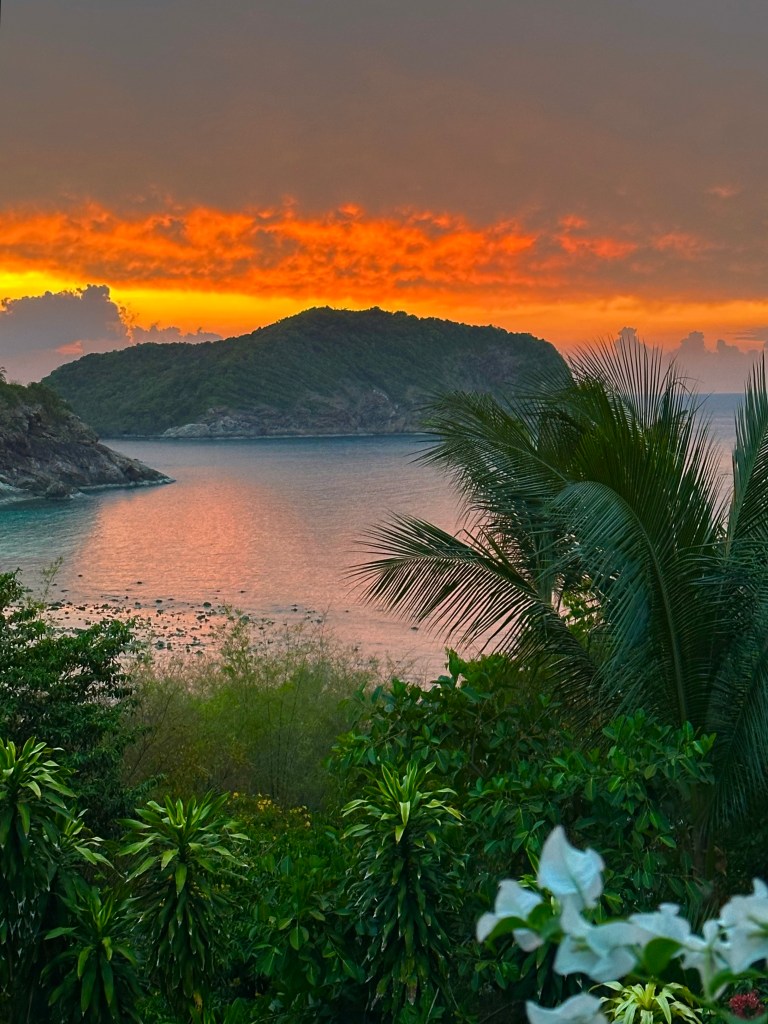
We have been living on Koh Phangan for the past couple of months now, and some days I still cannot quite believe this is our life. The island is absurdly beautiful in the way tropical places often are; almost offensively beautiful at times. The sea shifts between silver and turquoise throughout the day, enormous butterflies drift through the garden as though someone placed them there deliberately, and every evening the sky dissolves slowly into pink and purple over the palms. There are mornings where the light filtering through the leaves outside our house feels so impossibly serene that I momentarily forget every uncertainty I have ever carried.
And don’t get me started on the wildlife here; it still feels slightly unreal. From our garden alone we have already seen monkeys, kingfishers, tiny bright-yellow birds I still cannot identify, hummingbird-like colibris, sea eagles with wingspans that look close to two meters across, enormous lizards casually swimming through the pool as though they own it, blue and pink geckos clinging to the walls at night, ginger squirrels racing across the trees, bats flickering through the dusk — and once, at sunset, an entire flock of dolphins moving through the sea below the house while the water turned gold. Sometimes it genuinely feels like living inside some lush, half-wild botanical garden where nature has quietly reclaimed the edges of everything.
And yet, beneath all this beauty, I have also felt strangely homeless lately.
Not physically homeless, obviously. I know how privileged we are. I know many people would read this and think: what on earth do you possibly have to complain about? And maybe that is precisely why I hesitated to write any of this publicly at all. Because there is something deeply uncomfortable about feeling untethered while surrounded by so much beauty.
But I think what I am struggling with is not gratitude. It is belonging.
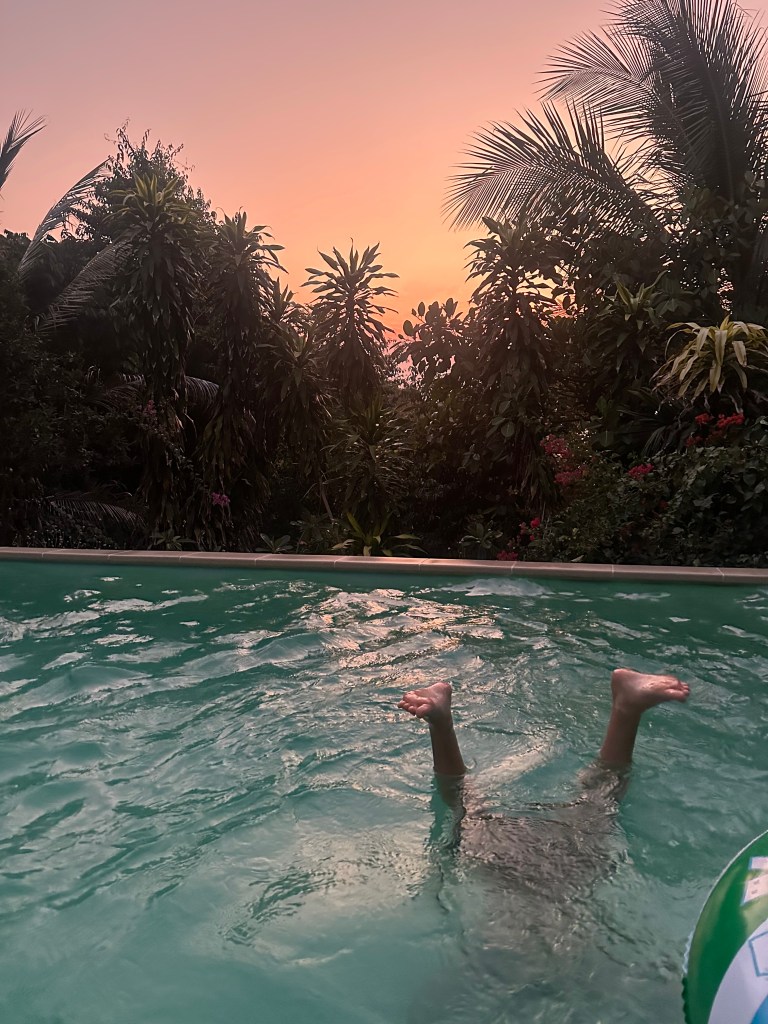
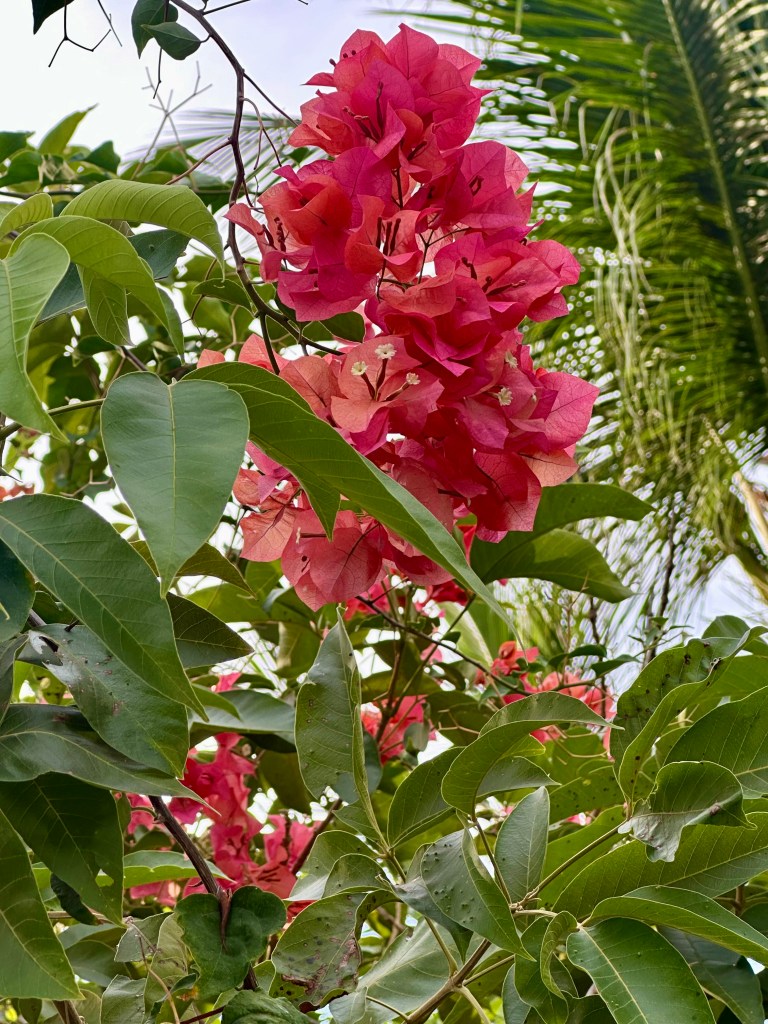
The strange thing is that I increasingly feel homesick for places that do not fully exist anymore — or perhaps never existed in the first place except as emotional landscapes inside my own mind. I miss Bali intensely sometimes: the humidity in the evenings, the smell of wet vegetation after tropical rainstorms, geckos clicking in the darkness, the feeling of living so closely intertwined with weather and nature and ritual. But I also miss Denmark in an entirely different register: the cold sea, Nordic summer evenings, the smell of autumn arriving, long conversations during dark winters, landscapes that shaped my nervous system before I even understood who I was.
And yet whenever I return to Denmark now, I also feel displaced there. Slightly out of rhythm. As though some internal part of me no longer entirely aligns with the culture I came from. It is not that I do not belong there at all — only that I no longer belong there uncomplicatedly.
Sometimes I genuinely wonder whether moving between worlds for too many years slowly changes your relationship to belonging itself. Whether you eventually become incapable of fully inhabiting one place because fragments of you remain emotionally scattered across several different lives, climates, languages, and versions of yourself.
A while ago, I met an older man at a dinner party. One of those endlessly wandering, sunburnt expatriate types who seemed to have spent decades moving between islands and countries and versions of himself. He fascinated me, though I also found him slightly unbearable. He spoke almost exclusively about himself, about the landscapes he had loved, the places he had left behind, the beautiful country where he had once lived for more than twenty years before moving on again.
“Don’t you miss it?” I asked him at one point.
“I only miss places I haven’t been to yet,” he replied.
What a sentence.
I remember wanting it to materialise somehow so that I could hold it in my hands and examine it properly. Run my fingers over its surface. Feel its texture. Perhaps even lift it toward my lips just to understand what shape and what textures such a way of being in the world takes.
Unfortunately, his statement felt a little too rehearsed to be really cool, but there was still something about it that unsettled me slightly. Perhaps because I recognized something of myself inside it. Not the freedom exactly, but the restlessness. The suspicion that too much rootedness slowly hardens into enclosure.
And yet my own longing is probably far more conservative than his.
I do not dream endlessly of places I have not yet seen. If anything, I think I long mostly for some impossible merging of what was and what is. A life where the different landscapes and versions of myself no longer feel emotionally fragmented from one another.
Perhaps that is partly why this feeling of home has become so difficult for me to locate. Because it no longer exists entirely in one geography. It has become something more abstract than that; a strange internal collage composed equally of memory, longing, sensory impressions, people, climates, and imagined futures.
Part of me still dreams intensely of rootedness. An old house somewhere. Uneven stone and wooden floors. Overgrown fig trees. Shelves overflowing with books. A studio where I paint again. Long dinners under vines. Space for slowness. Space for silence. Space for life to deepen gradually over years instead of constantly being rearranged.
And then another part of me resists that image almost immediately, because I know myself well enough to know that too much permanence can also begin to feel like enclosure. I have always feared stagnation slightly more than instability. Perhaps because some of the moments where I have felt most profoundly alive emerged precisely through movement, uncertainty, beauty, risk, reinvention, and allowing life to unfold beyond my control.
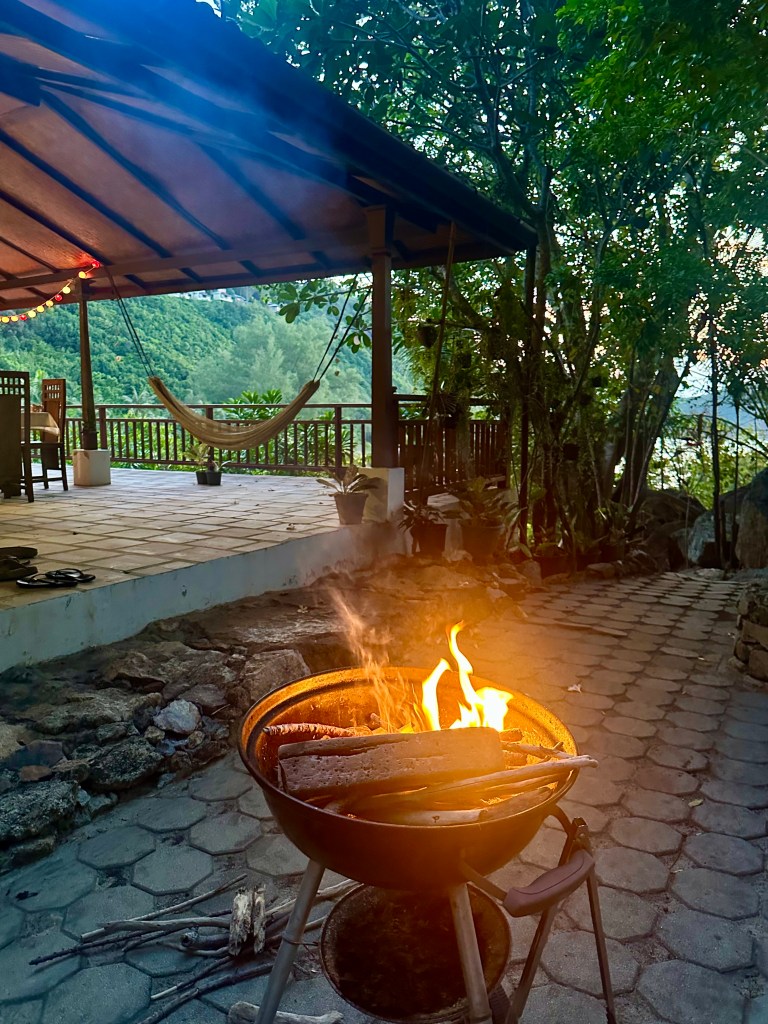
Still, movement has its cost too.
Our oldest son has been moving through his own transitions lately. Before coming here to Koh Phangan, he travelled first alone to the Faroe Islands, wandering through raw landscapes he later described to me as “almost unbearably beautiful,” and afterwards to America to meet parts of the family he had never truly known. The experience there became painful in ways I still struggle to process fully. Watching your child encounter rejection changes something in you permanently. It strips away certain comforting illusions about family, belonging, and what love actually is. There were moments afterwards where I felt almost physically furious at the hostility and emotional inhospitability he encountered there.
And yet despite everything, he arrived here on the island and slowly began rebuilding himself again. He trains constantly, works on his portfolio, creates things, keeps moving forward. There is something incredibly moving about young people’s resilience sometimes; the way they continue becoming despite disappointment.
Our youngest son has surprised me in entirely different ways. When we first arrived here, we told him there was no rush to start school immediately. We thought perhaps he would need time to settle in first. But he insisted that he wanted to begin right away because, as he put it very simply:
“I want a social life.”
I still smile thinking about that sentence.
There is something so brave about entering a classroom on a small tropical island far from everything familiar and simply deciding to participate fully in life.
Watching my children navigate all these transitions has made me think a great deal about courage lately. Not dramatic courage, but the subtle kind. The kind that consists simply of remaining open. Continuing despite uncertainty. Allowing yourself to begin again.
Perhaps that is also what I myself am trying to learn.
Because the truth is that I still dream constantly, perhaps even more now than when I was younger. I dream about opening a small bookshop somewhere. About writing more books. About renovating an old house slowly over many years. About painting again. About creating spaces that feel warm and alive and deeply inhabitable. About gardens and oceans and conversations and creative work and a life shaped less by performance and more by presence.
At the same time, I no longer believe that a meaningful life necessarily looks coherent from the outside. Some seasons are clearly for rootedness. Others are for wandering. Some dreams dissolve while entirely new ones emerge unexpectedly in their place. Plans change. People change. Landscapes change. We change.
All I know with certainty is that I still want a life that feels alive.
A life close to nature. A life where beauty still has the power to undo me a little. A life with books and conversations and oceans and creative work and movement and people I love deeply. A life where things are allowed to evolve rather than calcify. A life where I do not become entirely closed around myself.
Perhaps home, for me, is ultimately not a fixed geography at all.
Perhaps it is simply the feeling of remaining open to life, even while moving through uncertainty.
Thank you som much for reading.
 The Immaterialist