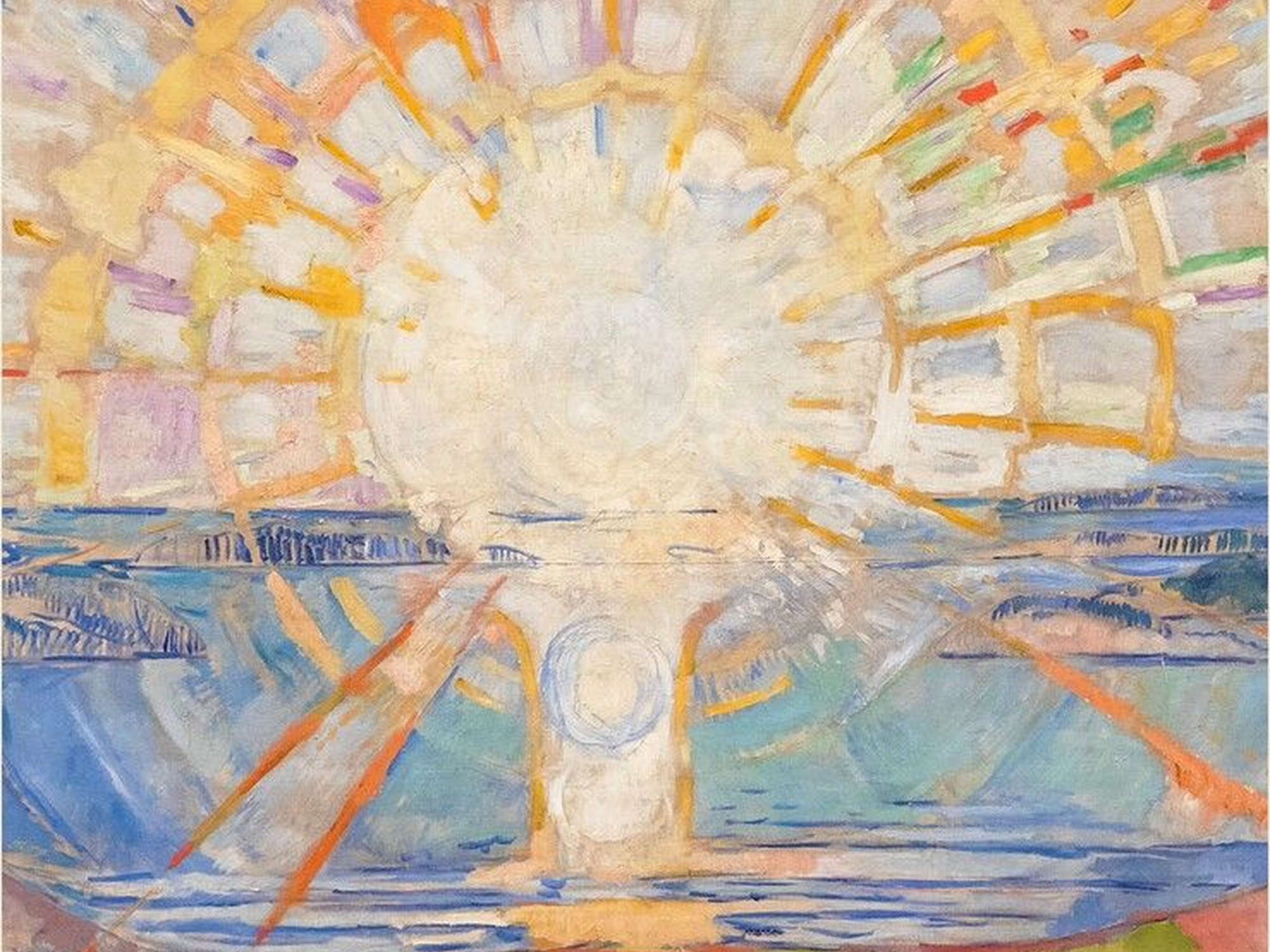
My son tells me about a boy in his class who always tries to trip him as he walks past. “He’s so stupid, Mum,” he says. “Why is he doing this? Why is he mad at me?”
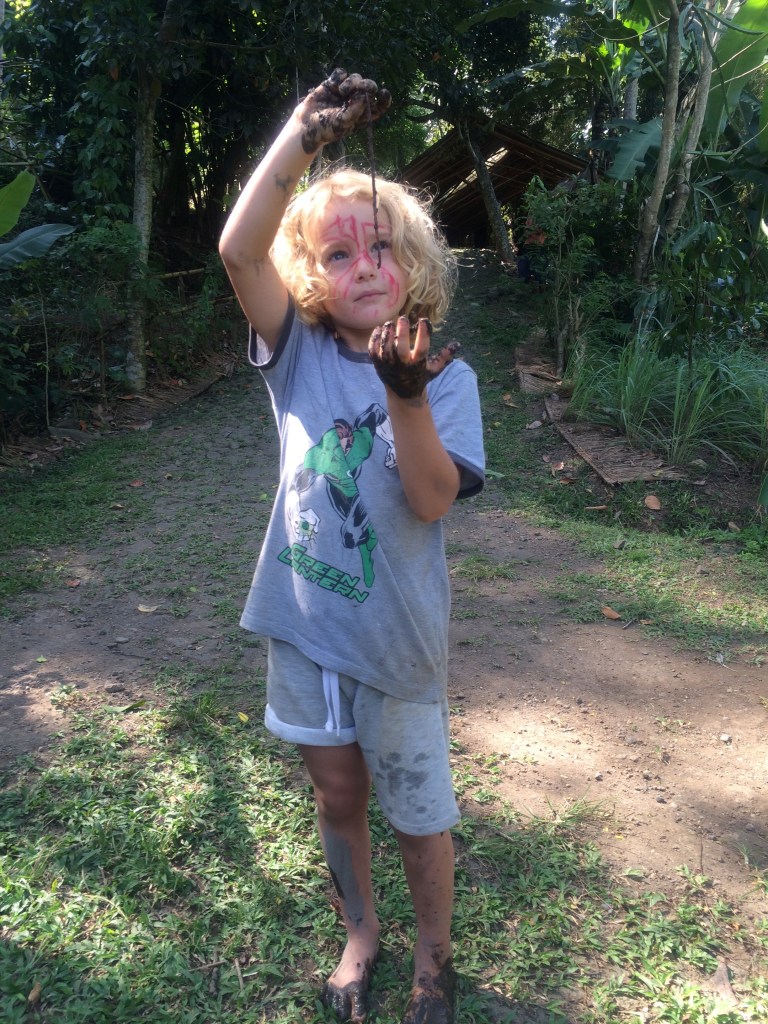
I suggest that perhaps the boy is envious. We’ve just moved to the island, and as the new kid in class, he has drawn attention. Many of the other children want to play with him because he’s fast, funny, fearless, and a little wild.
He looks at me, puzzled. “What do you mean?”
I pause, realizing that he might not fully grasp the word envious — after all, he’s only five years old. I begin to explain.
But he interrupts. “Mum, I know what envy is. But how can someone be envious of another person? We can do the same things.”
“What do you mean?” I ask. “Maybe you’re faster at running than he is, or better at telling funny stories?”
He shakes his head, smiling. “No, Mum, you have to stop. I might be a little faster, but we can both run. And he can tell stories too. We can do the same things.”
I pause, considering his words. “But don’t you ever feel envious? That tight feeling in your stomach when you wish you were as good at something as someone else?”
“Of course!” he laughs. “But I never feel envious of people. I’m only envious of animals.”
“Really?” I ask, intrigued. “Which animals?”
“I envy the snake that can glide silently through the forest, the tiger that’s strong and brave and can run almost like lightning, the eagle that can soar and see far away, and the ant that can lift fifty times its own weight.”
We are taught that humans are superior to animals. That intelligence, reason, and culture elevate us above them. But what if this belief is a symptom of our domestication, an illusion we tell ourselves to justify our distance from the wild? But my son, still untamed by these ideas, doesn’t see hierarchy — only difference. He sees that humans are not better than animals; we are simply another species, shaped by different strengths and weaknesses.
Here in Bali, pigs and chickens are transported in cramped cages under the scorching sun. When I ride my scooter behind one of the many small, creaking trucks carrying livestock, I can almost smell the fear of the animals; a nauseating, sweet odor mingled with the stench of old blood and rotting flesh. Pigs are crammed into tube-like cages that restrict their movement, their skin turning a bright, alarming red as they bake in the tropical heat.
“They must be so scared,” my son often says when we pass one of these trucks.
I’m sure they are. I hear the anguished screams of pigs being shoved into cages, their cries echoing like those of terrified children. Once inside, they fall silent, as if resigned to their fate.
Chickens, too, are treated as if they were mere objects. Stuffed into cages so tightly they cannot move, many lose their feathers and suffer injuries from the metal lattice. The unlucky ones at the bottom are sometimes already dead, their bodies adding to the foul, rotting smell. Elsewhere, chickens dangle from the backs of scooters, tied by their legs, their heads swinging perilously close to the asphalt.
Near my son’s school, a man sells chickens in a parking lot, often leaving their cages open. “Why don’t the chickens run away?” my son always asks. “Go, go!” he shouts, urging them to flee.
But they don’t.
Animals born and raised in cages don’t even consider freedom an option; captivity has been cultivated into them, stripping away their wild instincts.
Pigs are said to be more intelligent than dogs. Yet, the contrast in how we treat them is stark. We cherish dogs as family members, protect them, even mourn their passing. But pigs? We lock them in cages, silence their screams, and sever them from the dignity of the wild. Why is one creature granted protection while the other is deemed disposable? The answer lies, I guess, in what we have been taught to value, not in any natural order.
A few months ago, I passed one of the horrendous pig transports in torrential rain. As I drove by, I made eye contact with one of the pigs, strapped into the cylinder in a humiliating position that exposed its genitals and twisted its forelegs. The small truck carrying the pigs was parked next to a kiosk, where the two drivers sat laughing and drinking beer, completely unaffected by the fact that they had just crammed the pigs into those absurdly small cylinders and would soon transport them to their slaughter.
The pig’s gaze met mine with a terror I had never witnessed before, and I nearly swerved off the road because I couldn’t bring myself to break the eye contact — it felt too brutal. It was afraid, lying there exposed in the pouring rain, unable to move, wallowing in its own and the other pigs’ urine and feces.
The scenario was so humiliating that a wave of nausea overwhelmed me, forcing me to pull over and surrender to my body’s urge to empty my stomach.
So there I stood, drenched by the rain, just a few meters from the pig transport, still smelling its foul stench, as I vomited in streams.
And then I drove on.
What else was I supposed to do?
Confront the men driving the pig transport? Demand better conditions for the animals? Ask to speak to their boss? Sure, I could have done any of those things, but would it have made any difference?
I couldn’t shake the pig’s gaze from my mind. It haunted me for weeks afterwards. I kept wondering why I needed to imagine those eyes as somehow human before I allowed myself to feel their suffering.
This reflects another dimension of cultivation: not only shaping how we behave, but how we relate to the natural world; positioning us as separate from, and often dominant over, it.
Why is it only when we anthropomorphize animals that we are able to feel compassion for them and treat them with respect? Every dog or cat owner gives their pet a cute baby name and happily speaks to it in a baby voice or talks for it (“I want another treat, Mommy”). Eating a puppy would be almost as absurd as practicing cannibalism. Something dark and wild. It is only farm animals, stripped of individuality and treated as mere objects, we permit ourselves to slaughter. But in Disney movies, farm animals often act like humans — with voices and emotions, family relationships, and friends. It’s actually quite demoralizing to serve such stuff to children alongside meatballs or chicken nuggets.
The same applies to nature. Why do we only feel discomfort in destroying it when we perceive nature as intelligent — specifically in an anthropocentric sense, as something communicative, sentient, thinking, healing, and organizing?
Nature is either a resource for us or akin to us, thus worthy of preservation. There seems to be no middle ground where it can simply exist as nature. Why can’t we recognize nature as having intrinsic value? I have a deep, deep desire for nature to simply be — without needing to be useful, beautiful, or otherwise burdened with value.
In reality, it is only when we view ourselves as separate from nature that we can classify it as beautiful or ugly, useful or useless. But isn’t there something irrational about that distinction?
Are we not part of nature? Or, at the very least, do we not originate from nature and return to it?
I am uncertain about what we are in the phase that lies in between — life. Are we also nature then? Or have we become too cultured or civilized to be considered part of nature? Have we created too much distance?
We say, “from dust to dust.” Perhaps we should say, “from nature we have come and to nature we shall return.” Because when culture, civilization, and human life cease, only nature remains.
Civilization has spent millennia drawing a line between humans and the wild, building barriers that distance us from nature. But perhaps this division is an illusion, because are we really separate from the natural world, or are we part of it?
To rewild is to dismantle this illusion of superiority, to recognize that the natural world is not beneath us but inseparable from us. It is to see, as my son does, that the snake, the tiger, the eagle, and the ant are not just creatures to observe or admire from afar, they embody instincts, strengths, and ways of being that we, too, carry within us. They are not lesser; they are just different.
Perhaps the question is not whether humans are superior to animals. Perhaps the real question is what we traded away in order to believe that we are.
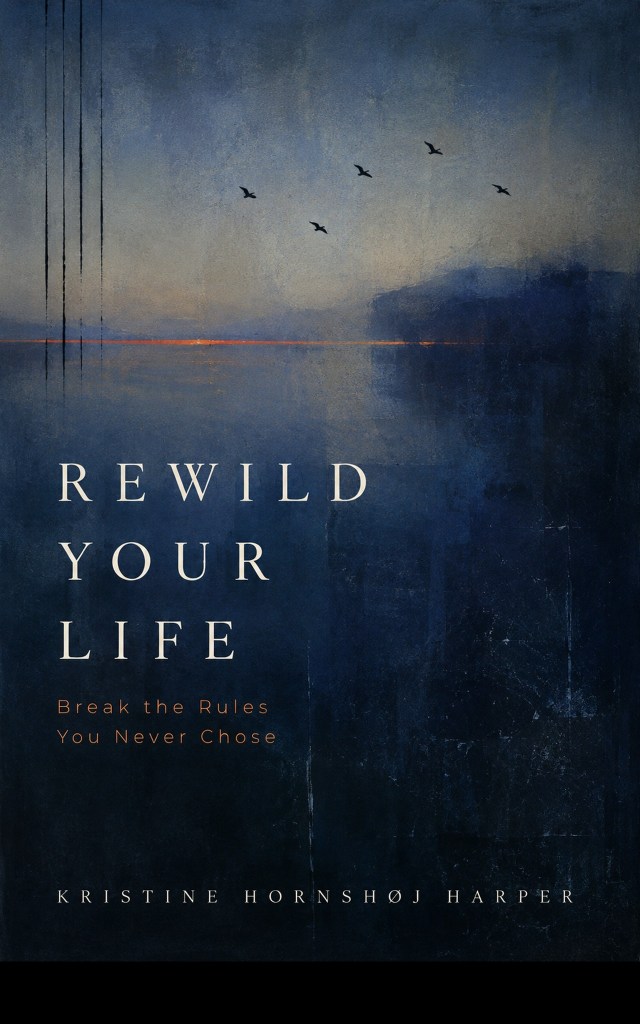
This is an extract from my newly published book Rewild Your Life.
The cover painting is one of my favorites, by Norwegian artist Edvard Munch, “The Sun” 1909

